or at home across
Johannesburg
Assessment first. Care that follows.
Good wound care begins with understanding what may be affecting healing. Assessment guides the treatment plan, with care adapted as the wound and the person’s needs change.
A thorough assessment considers the wound itself, the surrounding skin and the wider factors that may be influencing healing. Findings guide an individual plan of care and ongoing review.

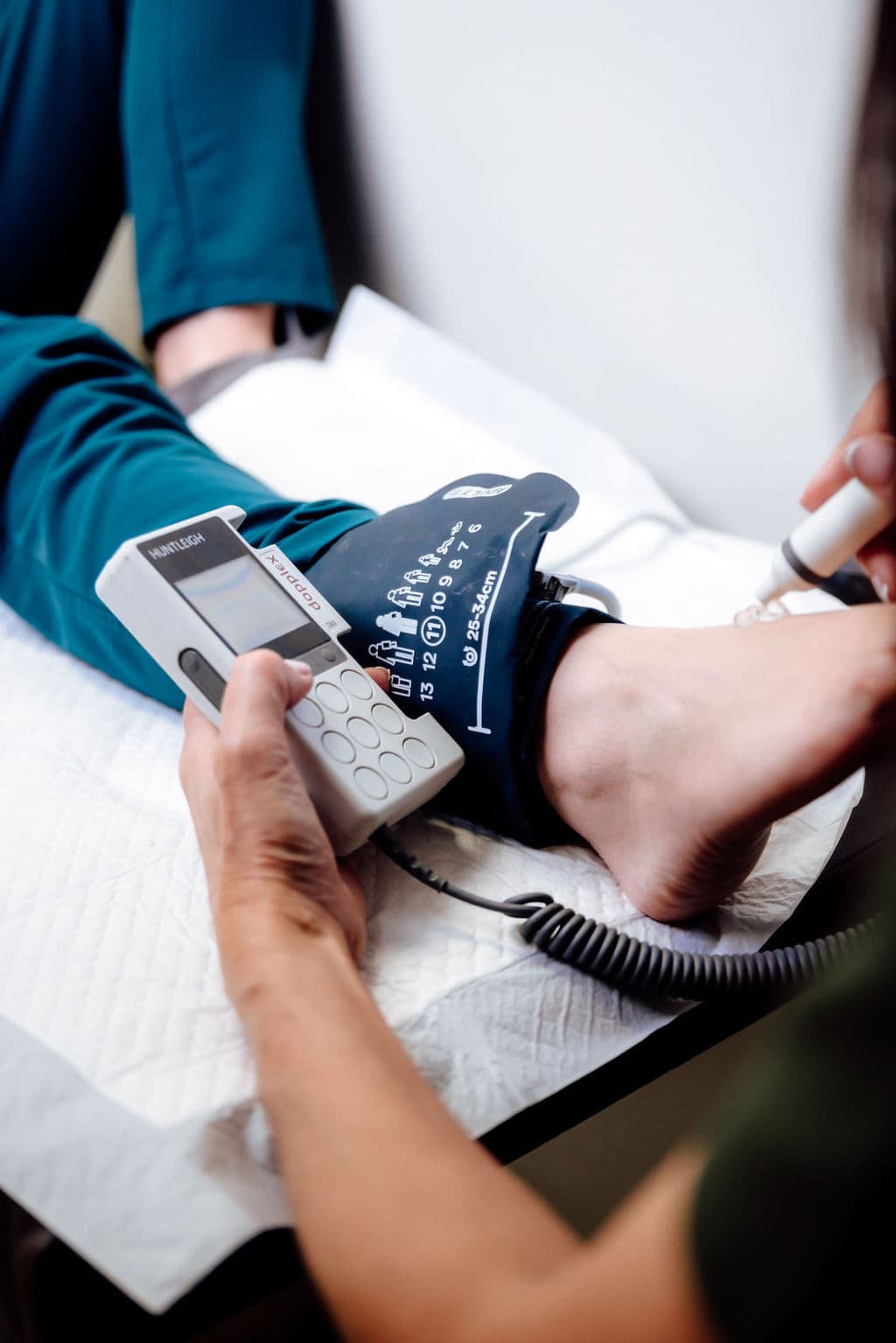
For wounds of the lower limb, understanding circulation is an important part of assessment. Where indicated, vascular assessment helps guide safe treatment, including the suitability of compression, and identifies when further medical or vascular review may be needed.
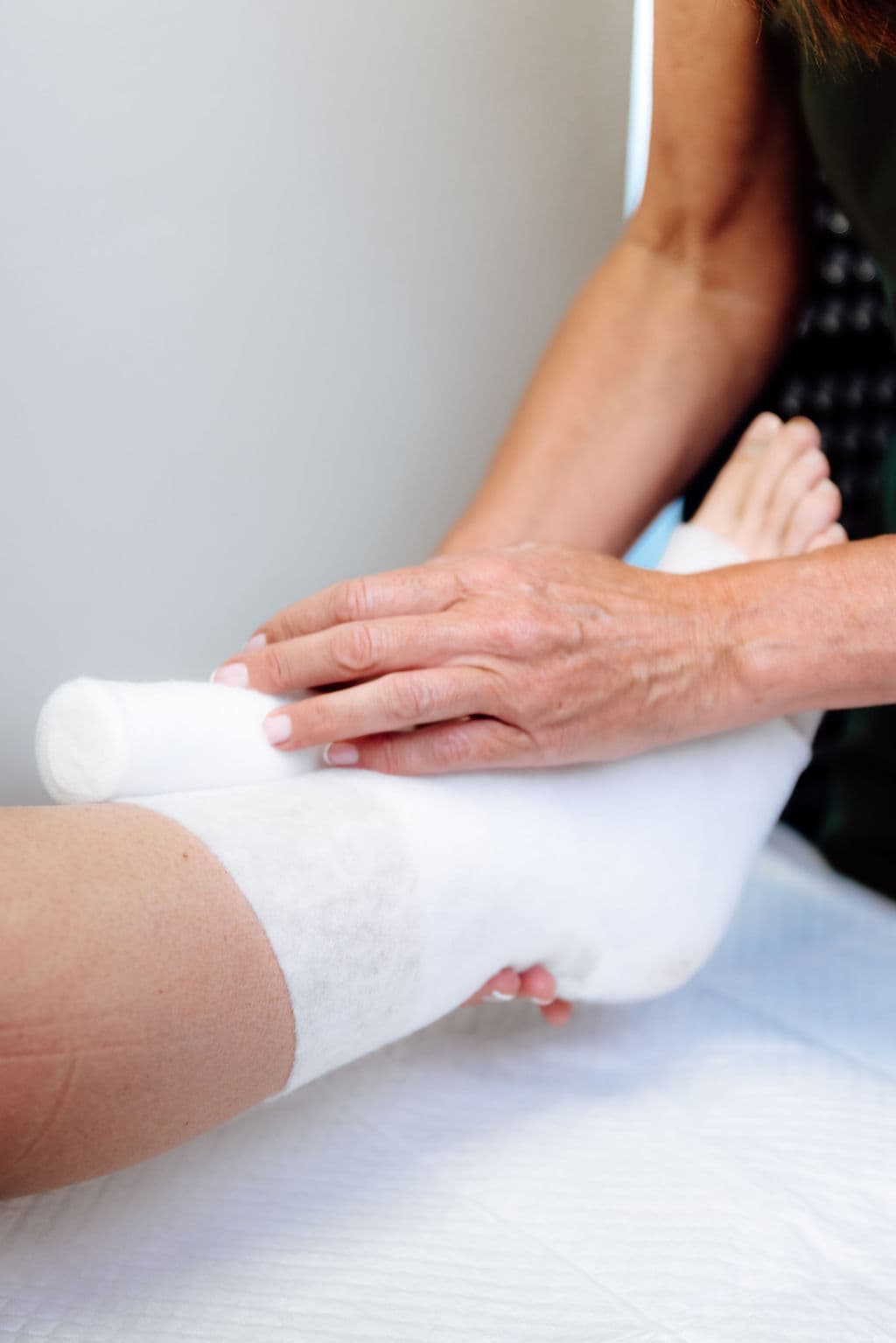
Compression therapy may form an important part of managing venous leg ulcers and chronic lower-limb oedema. The type and level of compression is selected following appropriate vascular assessment and according to individual clinical need.
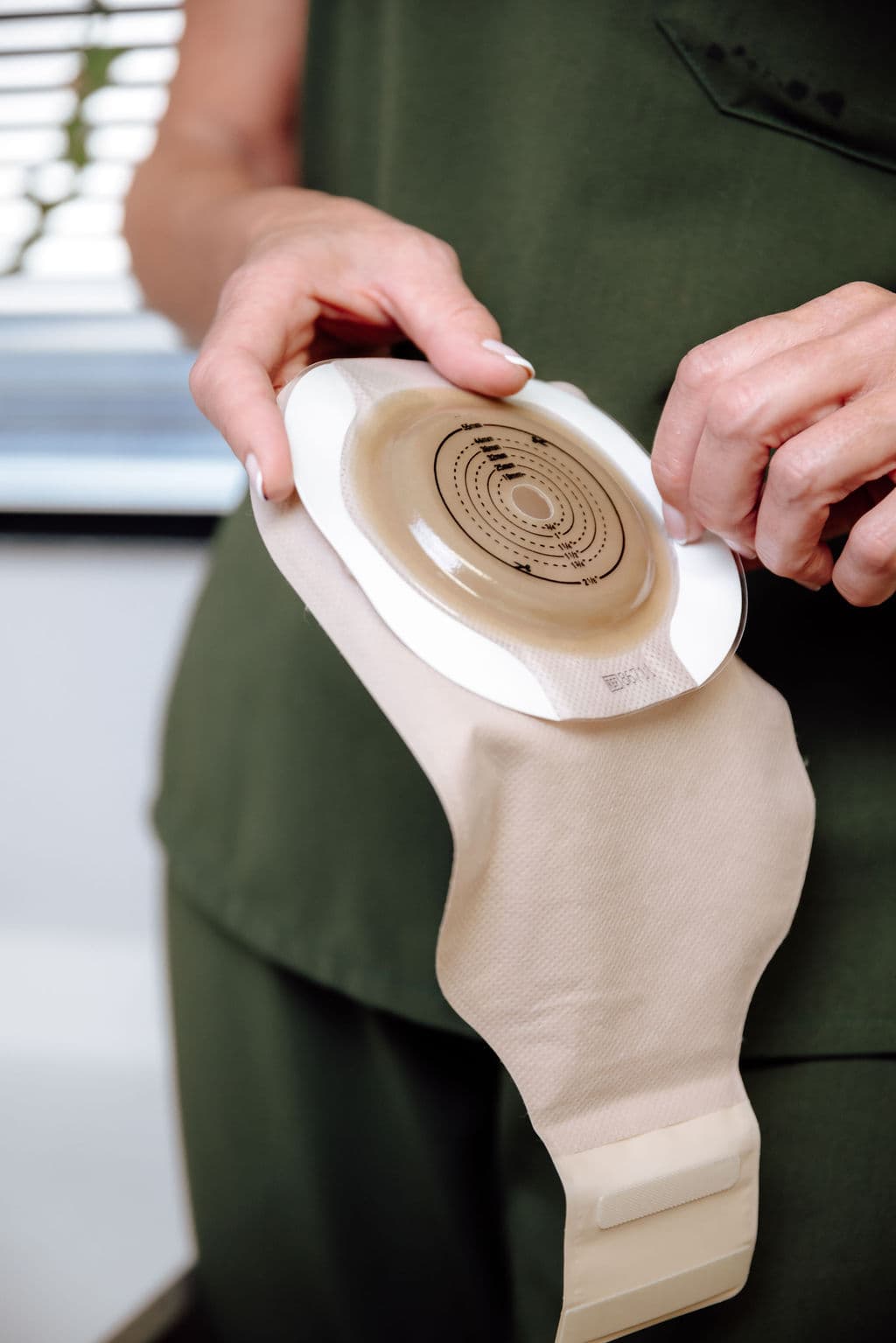
Individual support before and after stoma surgery, as well as ongoing care for people living with a stoma. Assessment may include appliance fit, peristomal skin, practical concerns and adapting care as needs change.
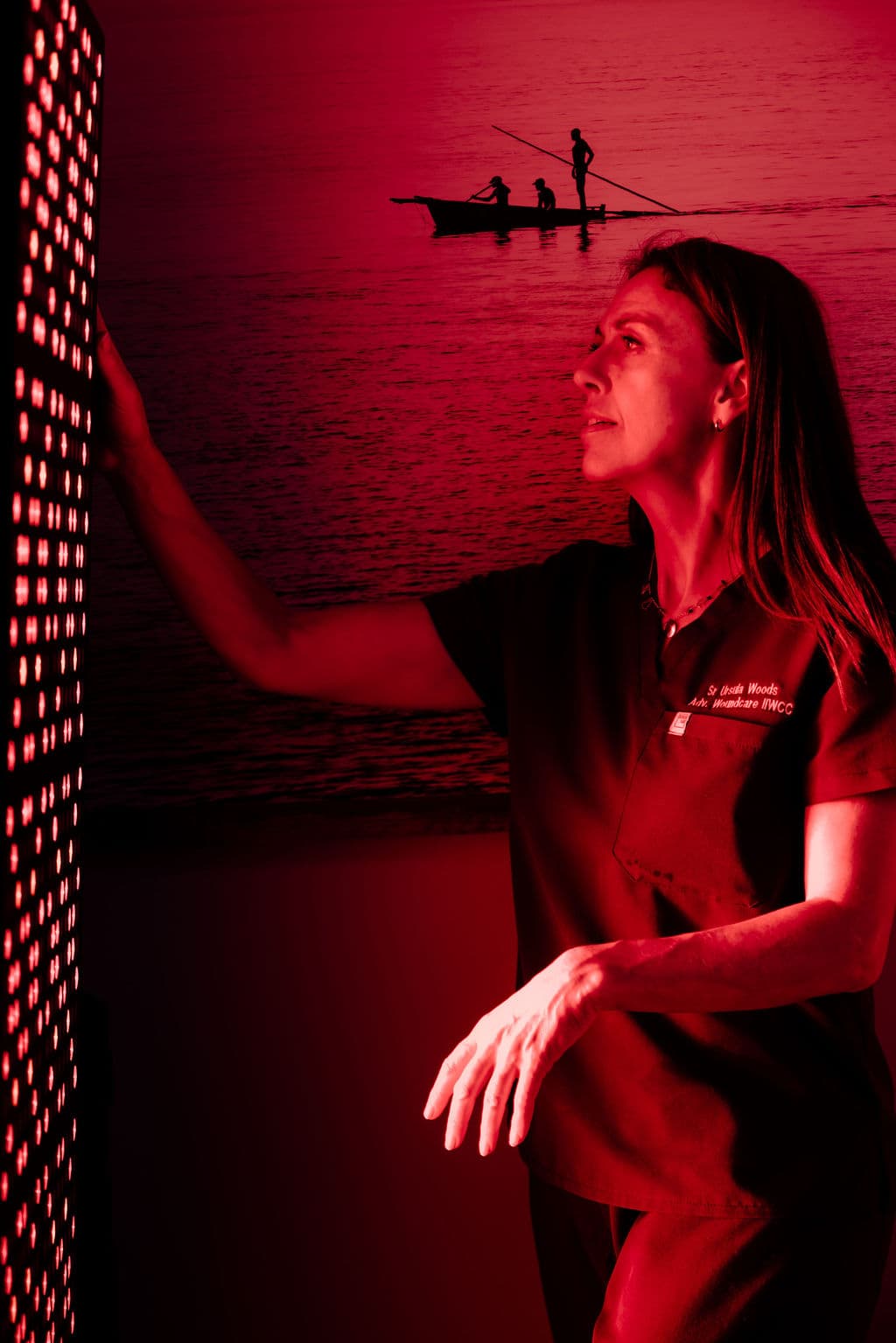
Photobiomodulation, or ‘red light therapy’, uses specific wavelengths of red and near-infrared light. The light is absorbed by structures within the cell, particularly the mitochondria, which help produce the energy needed for tissue repair and recovery. Where clinically appropriate, it may be used as an adjunct to facilitate healing.
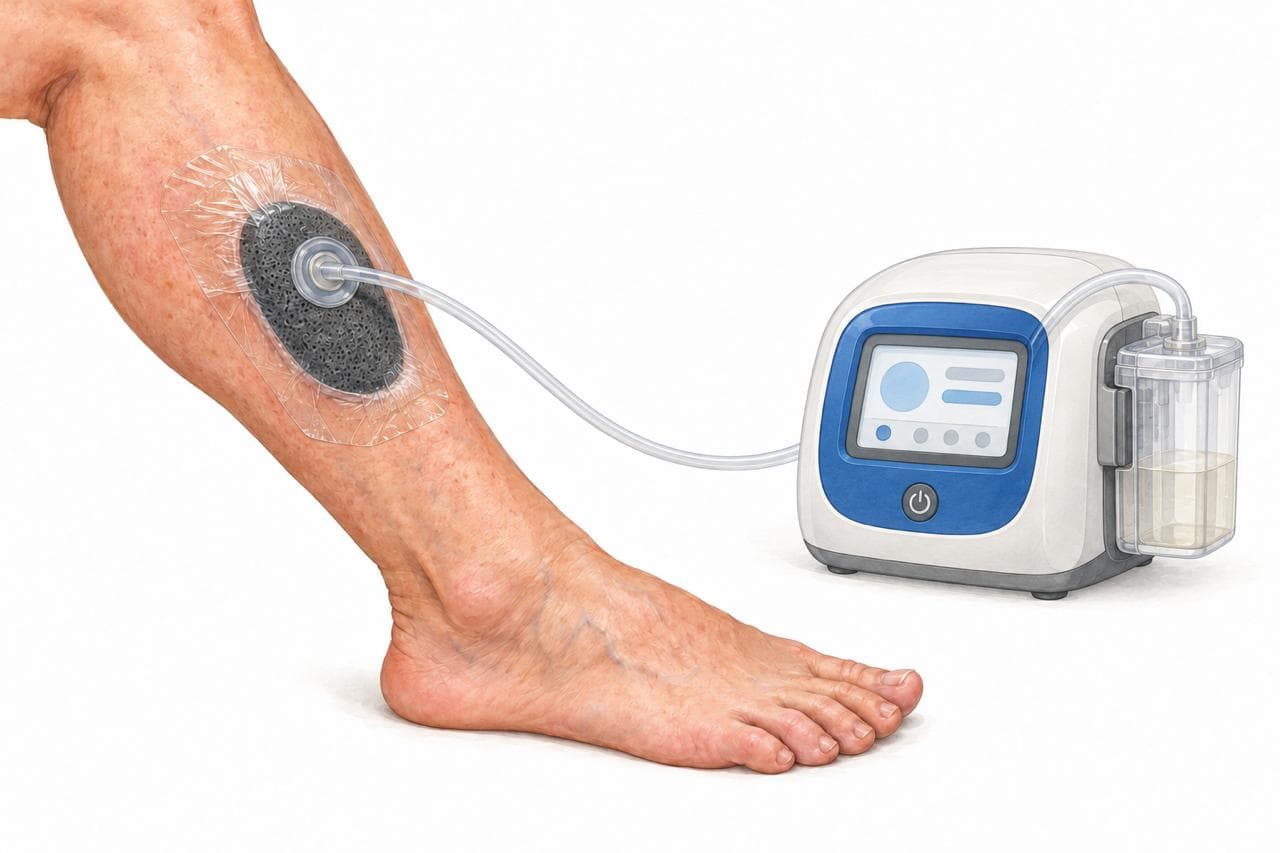
Negative Pressure Wound Therapy (NPWT), commonly referred to as a ‘Wound VAC’ (Vacuum-Assisted Closure), is an advanced, non-invasive treatment utilised to accelerate the healing of acute, chronic or complex wounds. By applying controlled, gentle suction to the affected area, this innovative system creates an optimal environment for rapid cell growth and tissue recovery.
Not sure which of these you need? That is what the first appointment is for.
Assessment first. Care that follows.
Good wound care begins with understanding what may be affecting healing. Assessment guides the treatment plan, with care adapted as your needs change.
A thorough assessment considers the wound itself, the surrounding skin and the wider factors that may be influencing healing. Findings guide an individual plan of care and ongoing review.
For wounds of the lower limb, understanding circulation is an important part of assessment. Where indicated, vascular assessment helps guide safe treatment, including the suitability of compression, and identifies when further medical or vascular review may be needed.
Compression therapy may form an important part of managing venous leg ulcers and chronic lower-limb oedema. The type and level of compression is selected following appropriate vascular assessment and according to individual clinical need.
Individual support before and after stoma surgery, as well as ongoing care for people living with a stoma. Assessment may include appliance fit, peristomal skin, practical concerns and adapting care as needs change.
Photobiomodulation, or ‘red light therapy’, uses specific wavelengths of red and near-infrared light. The light is absorbed by structures within the cell, particularly the mitochondria, which help produce the energy needed for tissue repair and recovery. Where clinically appropriate, it may be used as an adjunct to facilitate healing.
Negative Pressure Wound Therapy (NPWT), commonly referred to as a ‘Wound VAC’ (Vacuum-Assisted Closure), is an advanced, non-invasive treatment utilised to accelerate the healing of acute, chronic or complex wounds. By applying controlled, gentle suction to the affected area, this innovative system creates an optimal environment for rapid cell growth and tissue recovery.